food & beverage · Teardown
Magic Spoon
Magic Spoon already does the hard part: the cart cross-sells four low-ticket add-ons and the PDP runs a bundle builder and a subscribe-and-save offer. The revenue left on the table is in the scaffolding: no spend threshold to climb toward, a subscription engine that goes quiet at the cart, a quantity ladder that never frames the bigger basket, and no post-purchase catch once the payment is locked.
We read Magic Spoon as a monetisation audit: where does every order under-earn, and where is the second sale already half-built. The good news up front: this store is further along than most. The cart runs a real cross-sell, the PDP has a bundle builder and a subscribe-and-save plan, and 80,000 reviews carry the trust. So this isn't about bolting on missing machinery. It's about the scaffolding around the machinery that already works. The cross-sell has no spend goal behind it. The subscription offer stops at the PDP and never reaches the cart, where a one-time buyer is most convertible. The quantity ladder never frames the bigger pack. And once the payment clears, nothing catches a second sale. We walked the funnel from PDP to post-purchase looking only at revenue per order. Here's where it leaks.
Home page
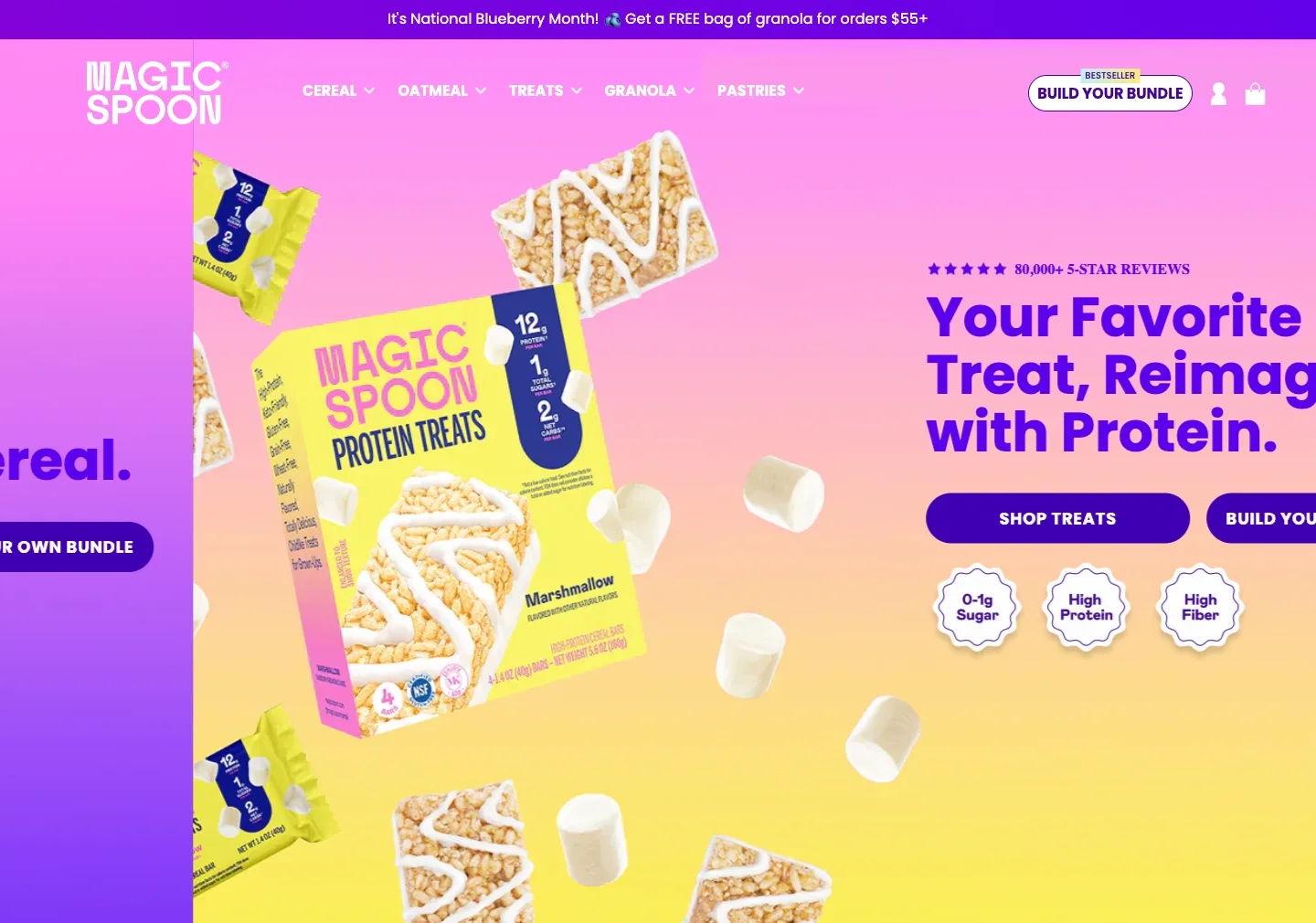
The home merchandises three of the highest-AOV mechanics a store can run, a "Build Your Own Bundle" builder, a "Subscribe & Save 20%" block with a free bowl set, and a best-seller Cereal Variety 6-Pack ($54), but presents them as parallel choices across separate bands rather than a ranked path from single box to bundle to subscription.
Fix: For a store this strong at merchandising, the three levers competing on the first two screens is the miss. We'd rank them by order value: lead with the variety multi-pack (the best-seller already does the AOV work), frame subscribe-and-save as the recurring upgrade on that exact pack, and hold the bundle builder for warm returning traffic. Ranked, the first choice a visitor makes is the higher-value one.
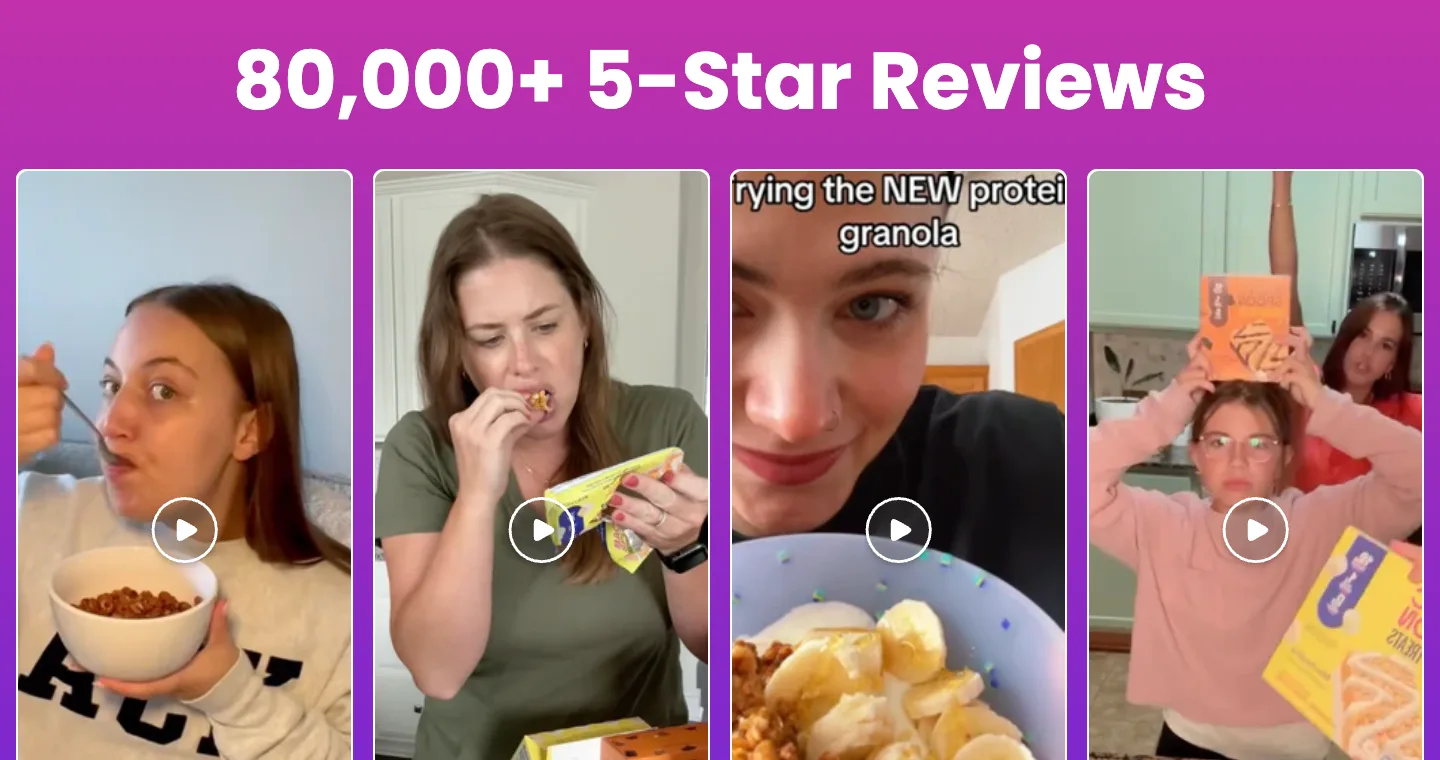
The proof is heavy (80,000+ five-star reviews, UGC video, testimonials), but all of it supports the decision to buy one box. Nothing frames the social proof toward the larger order: no "the variety 6-pack is the #1 choice", no "most Spooners subscribe and save 20%".
Fix: We'd make the proof do double duty. Pair the review count with a best-seller cue ("the variety pack is the most-loved way to start") so the trust validates not just the purchase but the higher-value version of it. Proof this strong should be selling the bigger basket, not only the first box.
Subscribe & Save 20% (plus a free bowl set) is merchandised hard on the home and the PDP, but the mechanic never follows the buyer into the cart, the one place a one-time order can still be flipped to recurring at the highest-intent moment in the funnel.
Fix: In a Baseline pass we'd run the subscription across the whole funnel, not just the top: the home teases it, the PDP offers it, and the CART converts it with a line-item toggle. A subscription engine that stops at the PDP leaves its cheapest, highest-intent conversion (the buyer with their card already out) untouched.
Product page
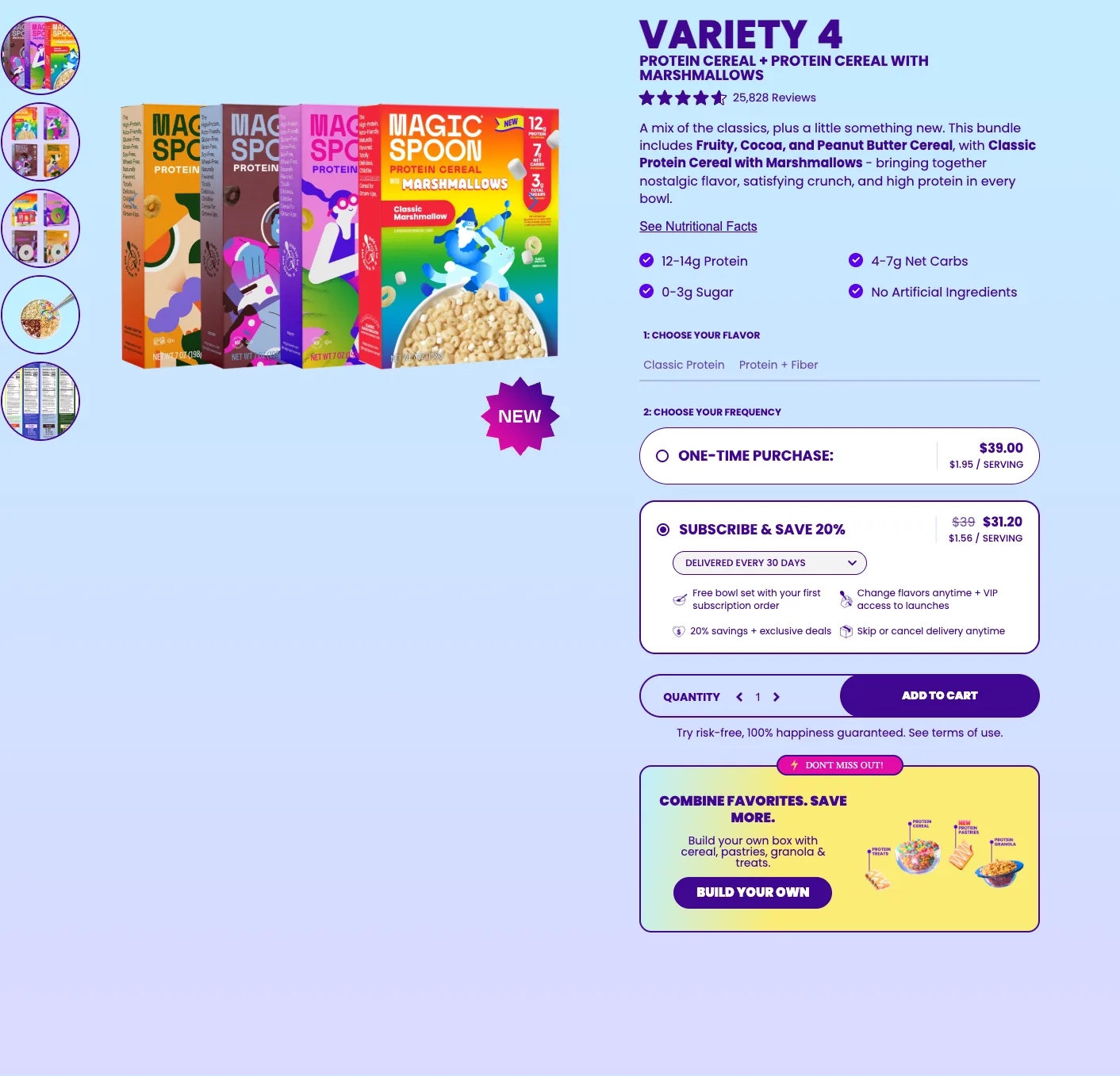
The purchase module lets a buyer pick Subscribe & Save or one-time and a quantity, and a "Combine favorites. Save more. → Build Your Own" bundle sits directly under Add to Cart. That's a genuine AOV surface, but it competes with a single-pack default instead of nudging quantity up before the add happens.
Fix: We'd build a quantity-value ladder into the buy box itself: 1 pack / 2 packs (save X) / subscribe, so the higher-AOV option is the default frame, and keep "Build Your Own" as the cross-category expander below it. The pack ladder captures units per order; the bundle captures range. Validate any pack discount against margin before it goes live.
The one Add to Cart lives near the top and the bundle cross-sell sits just under it, but there's no persistent buy-or-attach surface as the page runs 8,514px on desktop (nearly 19,000px on mobile) through ingredients, the US-vs-Them table, reviews, and the FAQ. A shopper who decides at the FAQ has scrolled past every attach opportunity the store built.
Fix: We'd pin a sticky bar that carries the add AND a one-tap attach ("+ add the treats, $9.75") so the second sale rides the entire scroll, not just the top screen. On a page this long, an attach that isn't sticky is an attach that's missed, and the store's own cart already proves which add-ons convert.
Every AOV asset exists on the PDP (the subscribe-and-save plan, the bundle builder, the quantity selector), but they're spread around a very long page rather than composed into one offer at the point of decision. The buy box shows a plan and a quantity; the money-making combinations live elsewhere on the scroll.
Fix: A Baseline rebuild composes the offer at the buy box (the pack ladder, the subscribe upgrade, and the bundle expander in one module) so every buyer sees the full menu of ways to spend more at the exact moment they decide, instead of hunting for it across a page that runs 8,514px on desktop and nearly 19,000px on mobile. The levers are all here; they just aren't in the same place as the decision.
Cart drawer
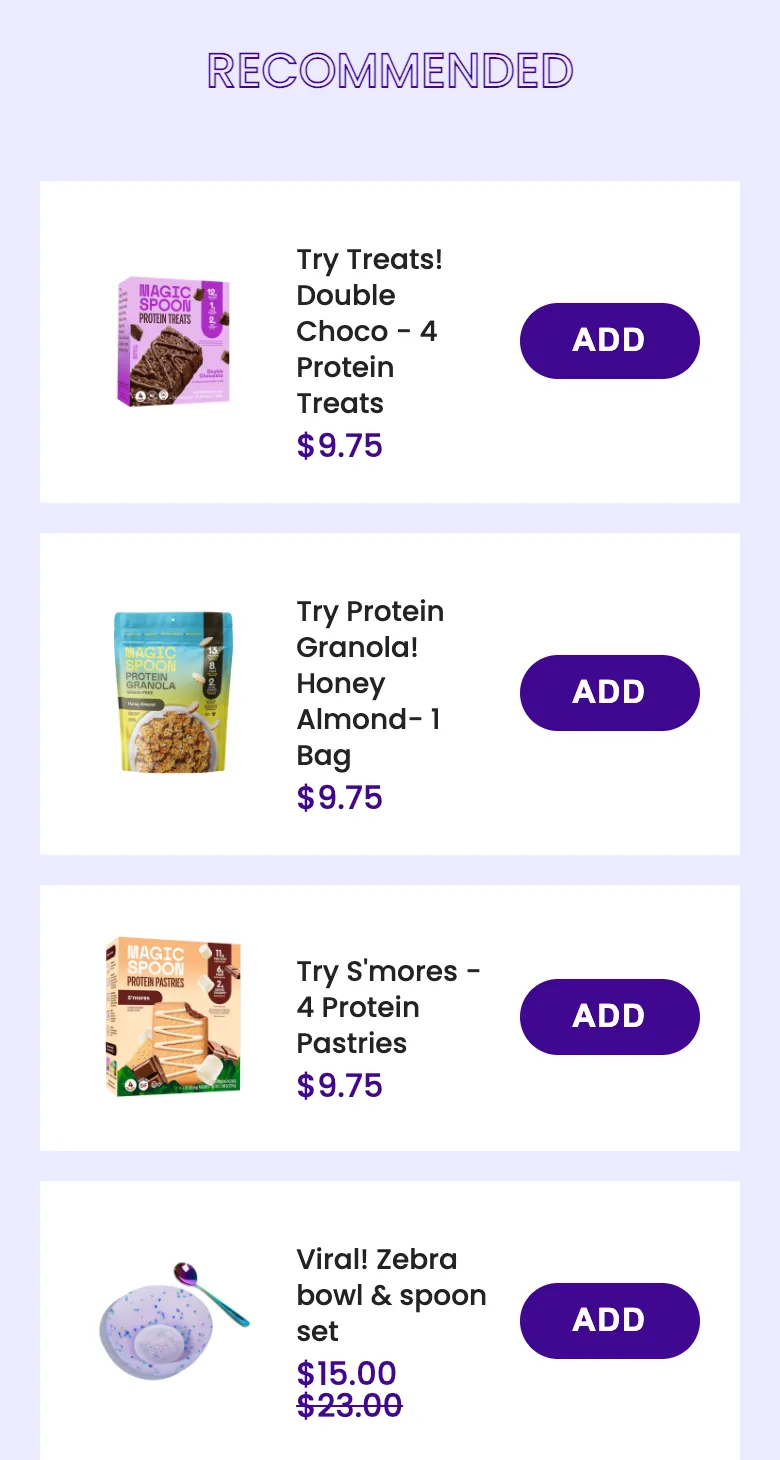
The cart already earns: a RECOMMENDED rail of four one-tap ADDs beneath the line item ($9.75 protein treats, $9.75 granola, $9.75 pastries, a $15 viral bowl set down from $23). It's a real second-sale surface. What it has no scaffolding for is a spend goal: no free-shipping meter, no gift tier, no "add one more to unlock". The $39 subtotal has nothing to climb toward.
Fix: We'd stack a threshold ladder on top of the working cross-sell: a free-shipping or gift-with-purchase bar that turns the $9.75 adds into the path to a reward. The recommendations stop being an optional ask and become the mechanism to hit the goal. Margin-check the threshold value so the incentive never outruns the revenue it adds.
The order enters the cart as a one-time $39 buy, the subscribe-and-save upgrade isn't offered at the line item, and there's no visible post-purchase surface after checkout to catch a second sale once payment is locked. The RECOMMENDED rail is the store's only in-funnel attach.
Fix: Two second-sale moves are unbuilt at the close. A "make it a subscription, save 20%" toggle on the cart line item is the cheapest recurring-revenue conversion in the funnel. And a one-click post-purchase offer on the confirmation step (an extra flavor, the viral bowl set) adds revenue with zero checkout risk. The store cross-sells well before checkout; the money after the sale is completely untouched.
Screens


What we'd fix
- 1Compose the PDP offer at the buy box (pack-quantity ladder, subscribe upgrade, and bundle expander in one module) instead of scattering the AOV levers across a marathon page.
- 2Run the Subscribe & Save engine across the full funnel so the cart, not just the PDP, is where a one-time order converts to recurring.
- 3Rank the home's three offers into one AOV ladder (multi-pack best-seller → subscribe upgrade → bundle builder) so the first choice a visitor makes is the higher-value one.
- 1Stack a free-shipping or gift-with-purchase threshold bar on top of the cart's working RECOMMENDED cross-sell so the $9.75 adds become the path to a reward (margin-check the tier).
- 2Add a "make it a subscription, save 20%" toggle on the cart line item, the highest-intent recurring-revenue conversion in the funnel.
- 3Add a one-click post-purchase offer on the confirmation step (an extra flavor or the viral bowl set) to capture a second sale after payment is locked, with no checkout risk.
Want these upsells live without dev?